
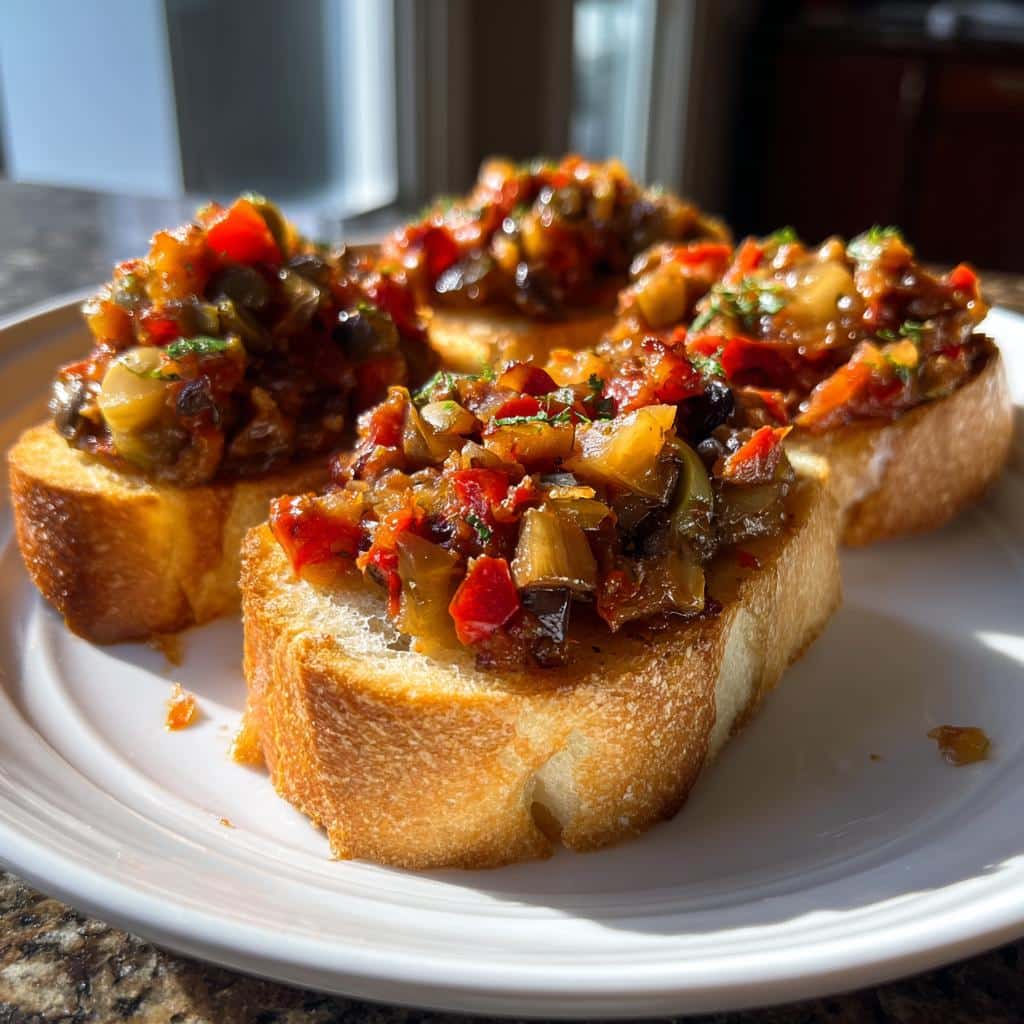
Oh, caponata crostini—where do I even begin? This isn’t just some fancy appetizer to me; it’s a bite of nostalgia. My first taste happened at a tiny trattoria in Sicily, where the owner (a feisty nonna named Lucia) shoved a plate toward me with a wink. “Mangia!” she commanded. One bite of that sweet-tangy eggplant relish on crisp bread, and I was hooked. Now, after years of testing (and burning a few eggplants), I’ve nailed my version of this Italian classic.
Trust me, it’s simpler than you think—just fresh veggies, a skillet, and that magical balance of vinegar and sugar that makes your taste buds sing. Whether you’re hosting or just treating yourself, these crostini deliver big flavors with minimal fuss. And hey, as someone who’s eaten caponata from Rome to Brooklyn, I can promise you this: once you master the basics, you’ll never look at eggplant the same way again.
Table of Contents
Why You’ll Love This Caponata Crostini Recipe
Let me tell you—this isn’t just another appetizer recipe. It’s the kind of dish that makes people hover around your kitchen, sneaking bites before you even finish plating. Here’s why it’s my go-to for everything from last-minute guests to fancy dinner parties:
- Effortless elegance: Looks fancy, but honestly? It’s just chopping and simmering. The hardest part is not eating all the caponata straight from the pan (I’ve burned my fingers more than once).
- Flavor fireworks: That sweet-tangy magic happens when the vinegar and sugar caramelize with the veggies. It’s like your taste buds get a little Italian vacation in every bite.
- Make-ahead MVP: The caponata actually tastes better after sitting overnight. I’ve been known to whip up a batch on Sunday and turn it into crostini all week—great for when surprise guests show up.
- Crowd-pleaser: Vegetarians? Covered. Gluten-free folks? Just swap the bread. Even my “I don’t eat veggies” uncle goes back for thirds.
- Versatile superstar: Leftover caponata? Toss it with pasta, pile it on grilled chicken, or eat it with a spoon like I do. No judgment here.
Seriously, this recipe checks all the boxes. It’s the dish people ask me to bring to every gathering—and the one I never get tired of making.
Ingredients for Caponata Crostini
Here’s the beautiful thing about caponata—it’s forgiving. You probably have half these ingredients in your kitchen right now! I’ve learned through trial and error (read: minor kitchen disasters) that quality matters most here. Splurge on good olive oil and fresh veggies—it makes all the difference.
For the Caponata:
- 1 eggplant, diced (about 2 cups—look for firm, shiny skins)
- 2 tbsp olive oil (the good stuff! It carries the flavor)
- 1 onion, chopped (yellow works best for sweetness)
- 2 celery stalks, diced (don’t skip! They add crunch)
- 1 red bell pepper, diced (for color and sweetness)
- 1/4 cup green olives, sliced (I prefer Cerignola—meaty and mild)
- 2 tbsp capers (rinsed if salted, for that briny punch)
- 1/2 cup tomato sauce (basic marinara works great)
- 1 tbsp sugar (balances the acidity—trust me on this)
- 1 tbsp red wine vinegar (or sub balsamic for depth)
- Salt and pepper to taste (start light—you can always add more!)
For the Crostini:
- 1 baguette, sliced (day-old works perfectly—no waste!)
See? Nothing crazy here. Just honest ingredients that transform into something magical. Pro tip from my Sicilian friend Lucia: “If your eggplant tastes bitter, sprinkle diced pieces with salt and let them sweat for 20 minutes before cooking.” Works like a charm!
Print
Irresistible Caponata Crostini Recipe With 5-Star Flavors
- Total Time: 40 minutes
- Yield: 12 crostini
- Diet: Vegetarian
Description
A simple Italian appetizer with sweet and tangy caponata on toasted bread.
Ingredients
- 1 eggplant, diced
- 2 tbsp olive oil
- 1 onion, chopped
- 2 celery stalks, diced
- 1 red bell pepper, diced
- 1/4 cup green olives, sliced
- 2 tbsp capers
- 1/2 cup tomato sauce
- 1 tbsp sugar
- 1 tbsp red wine vinegar
- Salt and pepper to taste
- 1 baguette, sliced and toasted
Instructions
- Heat olive oil in a pan over medium heat.
- Add eggplant and cook until softened.
- Add onion, celery, and bell pepper. Cook for 5 minutes.
- Stir in olives, capers, tomato sauce, sugar, and vinegar.
- Simmer for 15 minutes until thickened. Season with salt and pepper.
- Toast baguette slices until golden.
- Spoon caponata onto crostini and serve.
Notes
- Let caponata cool slightly before serving.
- Can be made ahead and refrigerated for up to 3 days.
- Prep Time: 15 minutes
- Cook Time: 25 minutes
- Category: Appetizer
- Method: Stovetop
- Cuisine: Italian
Equipment You’ll Need
Here’s the best part—you don’t need fancy gadgets to make killer caponata crostini. My tiny Brooklyn kitchen proves it! Just gather these basics (and maybe a glass of wine for the chef):
The Essentials:
- Large skillet – A 12-inch is perfect. Nonstick is great, but my trusty cast-iron works wonders for that caramelization.
- Sharp chef’s knife – You’ll be dicing like crazy. A dull knife is just begging for uneven eggplant pieces (and possibly tears).
- Cutting board – Bigger than you think you need. Eggplant has a sneaky way of rolling away mid-chop.
- Baking sheet – For toasting your crostini. No sheet? A toaster oven or even a dry skillet works in a pinch.
Nice-to-Haves:
- Wooden spoon – My grandma swore it “talks to the food.” Really, it just won’t scratch your pans.
- Measuring spoons – Eyeballing vinegar is risky business. Too much and you’ll pucker for days.
- Microplane – Only if you’re fancy and want to zest lemon over the finished dish (highly recommended).
Confession: I’ve made this with just a knife, a pot, and a fork to stir when I was camping. It’s that adaptable. But having the right tools? That’s when the magic really happens—without the stress.
Love elegant appetizers? You’ll also enjoy our Charred Radicchio Crostini — a bold, flavorful bite that makes the perfect partner to caponata.
How to Make Caponata Crostini
Okay, let’s get cooking! This is where the magic happens. Don’t let the fancy name fool you—making caponata crostini is about as simple as it gets. I’ll walk you through each step just like my Sicilian neighbor taught me (with fewer dramatic hand gestures).
Preparing the Caponata
Start with your eggplant—this is the star of the show. I like to dice mine into 1/2-inch cubes (no need to peel). Heat the olive oil in your skillet over medium heat until it shimmers. That’s your cue to add the eggplant. Stir every couple minutes until it starts to soften and get those golden edges—about 5 minutes total.
Now toss in the onion, celery, and bell pepper. This is when your kitchen starts smelling incredible! Keep stirring occasionally for another 5 minutes until the veggies start to soften but still have some crunch. You’re not making baby food here—texture is key!
Time for the flavor boosters: olives, capers, tomato sauce, sugar, and vinegar. Give everything a good stir, then lower the heat to a gentle simmer. Let it bubble away for 15 minutes, stirring now and then. You’ll know it’s ready when the liquid thickens enough to coat the back of a spoon. Taste and adjust the salt and pepper—I usually add an extra pinch of salt at this stage.
Toasting the Crostini
While your caponata simmers, let’s tackle the bread. Preheat your oven to 375°F (or use the broiler if you’re feeling bold). Arrange your baguette slices on a baking sheet in a single layer. No oil needed—we want them crisp, not greasy.
Toast for 5-7 minutes until golden at the edges. Watch closely after the 5-minute mark! Burnt crostini taste like regret (ask me how I know). For extra flavor, you can rub the warm toasts with a cut garlic clove—game changer!
Assembling the Caponata Crostini
Here’s where patience pays off: let the caponata cool for about 10 minutes before assembling. Hot caponata makes soggy crostini, and nobody wants that. Spoon a generous tablespoon onto each toast—don’t be shy! The caponata should peek over the edges invitingly.
Pro tip from my Italian friend: drizzle with a little extra olive oil and sprinkle with flaky salt right before serving. It’s those little touches that make people think you slaved for hours. Our secret!
Tips for Perfect Caponata Crostini
After burning more eggplants than I’d like to admit, I’ve learned a few tricks that take caponata crostini from good to “can I have the recipe?” status. These little hacks make all the difference:
Dice Like You Mean It
Uniform pieces aren’t just pretty—they cook evenly! Aim for 1/2-inch cubes on the eggplant and similar sizes for other veggies. My first attempt had giant eggplant chunks next to tiny pepper bits… let’s just say the texture was “interesting.” A sharp knife and patience solve this.
The Sweet-Tangy Tango
That vinegar-sugar balance is everything. Start with the recipe amounts, then taste after simmering. Too tart? Add a pinch more sugar. Too sweet? A splash of vinegar fixes it. I keep both handy while cooking—sometimes my tomatoes are sweeter than expected!
Eggplant Prep Secrets
If your eggplant tastes bitter, sprinkle the diced pieces with salt and let them sit 20 minutes. Rinse and pat dry before cooking. This draws out bitterness and prevents oil absorption. Learned this the hard way after making greasy caponata that could’ve fueled a small car.
Toast Like a Pro
Day-old bread toasts better than fresh—it’s drier so it crisps up beautifully. No stale bread? Bake fresh slices at 300°F for 10 minutes first to dry them out. And don’t crowd the pan! Overlapping slices steam instead of crisp.
The Waiting Game
I know it’s tempting to dig in immediately, but caponata tastes best at room temp. The flavors meld as it cools. Make it ahead and just rewarm slightly before serving. Bonus: it gives the bread time to crisp up without getting soggy.
One last thing—trust your instincts! My Nonna always said “recipes are suggestions.” If you love garlic, add a minced clove with the onions. Prefer spice? Throw in some red pepper flakes. Make it yours!
Caponata Crostini Variations
Here’s the beautiful part about caponata—it’s like a culinary playground! Once you’ve mastered the basic recipe (and burned your fingers taste-testing it straight from the pan like I have), feel free to get creative. These are my favorite twists that keep things interesting:
Veggie Swaps
Eggplant not your thing? No problem! Try these alternatives:
- Zucchini: Dice it just like eggplant—it soaks up flavors beautifully and cooks faster (reduce simmer time by 5 minutes).
- Mushrooms: Meatier texture! Portobellos add depth, while cremini keep it light. Sauté separately first to release moisture.
- Butternut squash: Sweet and seasonal. Roast cubes beforehand for caramelized goodness.
Bread Adventures
The toast is your canvas! Beyond baguettes:
- Ciabatta: Those big air pockets hold caponata like little edible spoons.
- Polenta squares: Bake slices until crisp for a gluten-free option with awesome texture contrast.
- Pita chips: Perfect for mini bites. Brush with olive oil and bake at 350°F until golden.
Flavor Boosters
Want to jazz it up? Toss in:
- Toasted pine nuts: Adds crunch and richness. Stir in right before serving so they stay crisp.
- Golden raisins: Soak in warm water first—they plump up and add pops of sweetness.
- Anchovies: Just 1-2 minced fillets melt into the sauce for umami depth (my Sicilian friend’s secret!).
- Fresh herbs: Basil or mint brighten everything. Tear and sprinkle on top at the end.
My golden rule? Taste as you go! The best variations happen when you trust your palate. Last summer, I threw in some grilled peaches on a whim—total game changer. Don’t be afraid to play with your food!
Serving and Storing Caponata Crostini
Alright, you’ve made this beautiful caponata—now let’s talk about showing it off! I’ve served these crostini everywhere from fancy dinner parties to “oops I forgot it was book club” moments. Here’s how to make the most of your masterpiece:
Perfect Pairings
This isn’t just appetizer territory—caponata crostini can star in all sorts of delicious scenarios:
- Wine match: A crisp Pinot Grigio or unoaked Chardonnay cuts through the richness. For red lovers, try a light-bodied Barbera—its acidity dances with the caponata’s tang.
- Antipasto platter: Surround your crostini with prosciutto, marinated mozzarella, and roasted peppers for an instant Italian feast. The salty meats balance the sweet-tart caponata perfectly.
- Soup companion: Skip the crackers—float a crostini on tomato bisque or minestrone. The bread soaks up flavors while staying crisp on top.
- Brunch twist: Top with a poached egg for the ultimate savory breakfast bite. The runny yolk turns the caponata into a sauce—heaven!
Storage Smarts
Here’s the good news—caponata actually improves with time! Store components separately for best results:
- Caponata: Cool completely, then transfer to an airtight container. It keeps beautifully in the fridge for up to 3 days (flavors intensify!).
- Crostini: Store toasted bread in a paper bag at room temp—plastic makes them soggy. They’ll stay crisp for 2 days.
- Reheating: Warm caponata gently in a skillet over low heat or in 15-second microwave bursts. Cold leftovers straight from the fridge? Also delicious—I’ve been known to eat it with a fork at midnight.
- Freezing: The caponata freezes well for up to 2 months! Thaw in the fridge overnight and refresh with a splash of vinegar before serving.
Pro tip from my catering days: Assemble crostini just before serving. If you need to prep ahead, keep the bread and caponata separate, then build them on a tray 30 minutes before guests arrive. That perfect crisp-to-soft ratio is everything!
Caponata Crostini Nutrition
Let’s talk numbers—but keep it real. I’m not a nutritionist, just a home cook who’s stared at enough labels to know estimates vary. Here’s the breakdown per crostini (because let’s be honest, nobody stops at one!):
- Calories: About 90 – mostly from that glorious olive oil and bread
- Fat: 4g (the good kind from olive oil!)
- Carbs: 12g – hello, delicious baguette!
- Protein: 2g – veggies pack more punch than you’d think
- Fiber: 2g – thank you, eggplant skins!
Now, full transparency: These numbers shift based on your exact ingredients. That fancy artisan bread? Maybe more calories. Splurging on kalamata olives instead of green? Slightly higher fat. But here’s what really matters—this is real food with no weird additives. Every bite gives you wholesome veggies, heart-healthy olive oil, and complex flavors that satisfy way better than any “diet” snack ever could.
My philosophy? Enjoy food that makes you feel good. These crostini check all my boxes—nutritious enough to feel virtuous, delicious enough to crave seconds. And that balance? That’s amore.
For more creative party bites and trending appetizer ideas, explore our boards on Pinterest where crowd-pleasing recipes are always in style.
Frequently Asked Questions
After years of making (and eating!) caponata crostini, I’ve fielded every question under the sun. Here are the ones that pop up most often—along with my sometimes-too-honest answers:
Can I freeze caponata?
Absolutely! Freeze the caponata (without bread) in airtight containers for up to 2 months. Thaw overnight in the fridge, then warm gently on the stove with a splash of vinegar to wake up the flavors. The texture softens slightly, but it’s still delicious. I always keep a batch in my freezer for last-minute guests—it’s saved my hosting dignity more than once!
What’s the best bread substitute for gluten-free crostini?
My gluten-free friends love these options:
Polenta squares: Slice cooled polenta into rectangles, brush with oil, and bake at 400°F until crisp (about 20 minutes).
Thick-cut roasted eggplant: Skip bread entirely! Top roasted eggplant rounds with caponata for a low-carb twist.
Rice crackers: Choose sturdy ones—the kind that can handle a hearty spoonful without crumbling.
Why does my caponata taste bitter?
Usually it’s the eggplant! Younger eggplants tend to be sweeter. If yours tastes bitter, try this: Salt the diced pieces and let them sit for 20 minutes. The salt draws out bitter compounds—just rinse and pat dry before cooking. Also, don’t skimp on the sugar in the recipe! That sweet-tangy balance is everything.
How long can assembled crostini sit out?
Ideally, no more than 2 hours at room temperature. The bread loses its crunch, and the eggplant mixture can get too warm. For parties, I set out small batches and replenish as needed. Pro tip: Place a bowl of extra caponata next to the tray so guests can add more to their toasts!
Can I use balsamic vinegar instead of red wine vinegar?
Yes—but adjust carefully! Balsamic is sweeter and more intense. Start with half the amount, then taste. I sometimes do a 50/50 mix of both vinegars for depth. My Sicilian aunt adds a teaspoon of balsamic at the end for a glossy finish—it’s magic!
spoon of balsamic at the end for a glossy finish—it’s magic!
Still have questions? Drop them in the comments! I answer every one (usually while nibbling on caponata leftovers).
Share Your Caponata Crostini Creations
Nothing makes me happier than seeing your kitchen adventures with this recipe! Whether it’s your first time making caponata crostini or you’ve perfected your own twist, I want to hear all about it. Here’s how we can keep the deliciousness going:
Snap those photos! Tag me @[YourHandle] when you share your caponata crostini masterpieces. Did you add pine nuts? Swap the bread? Forget the olives (like I did last Tuesday)? Show me your creations—the pretty ones and the “oops” moments alike. Some of my best recipe tweaks came from reader ideas!
Rate the recipe if you tried it! Did it earn a spot in your regular rotation? Was the vinegar balance just right? Your honest feedback helps other home cooks know what to expect (and helps me improve the recipe too).
Tell me your stories. Did this recipe remind you of a trip to Italy? Become your go-to party trick? Save the day when unexpected guests arrived? Some of my favorite kitchen memories start with simple dishes like this—I’d love to hear yours.
P.S. If you’re shy about posting publicly, my DMs are always open. I answer every message (usually while nibbling on caponata leftovers—it’s research!).