
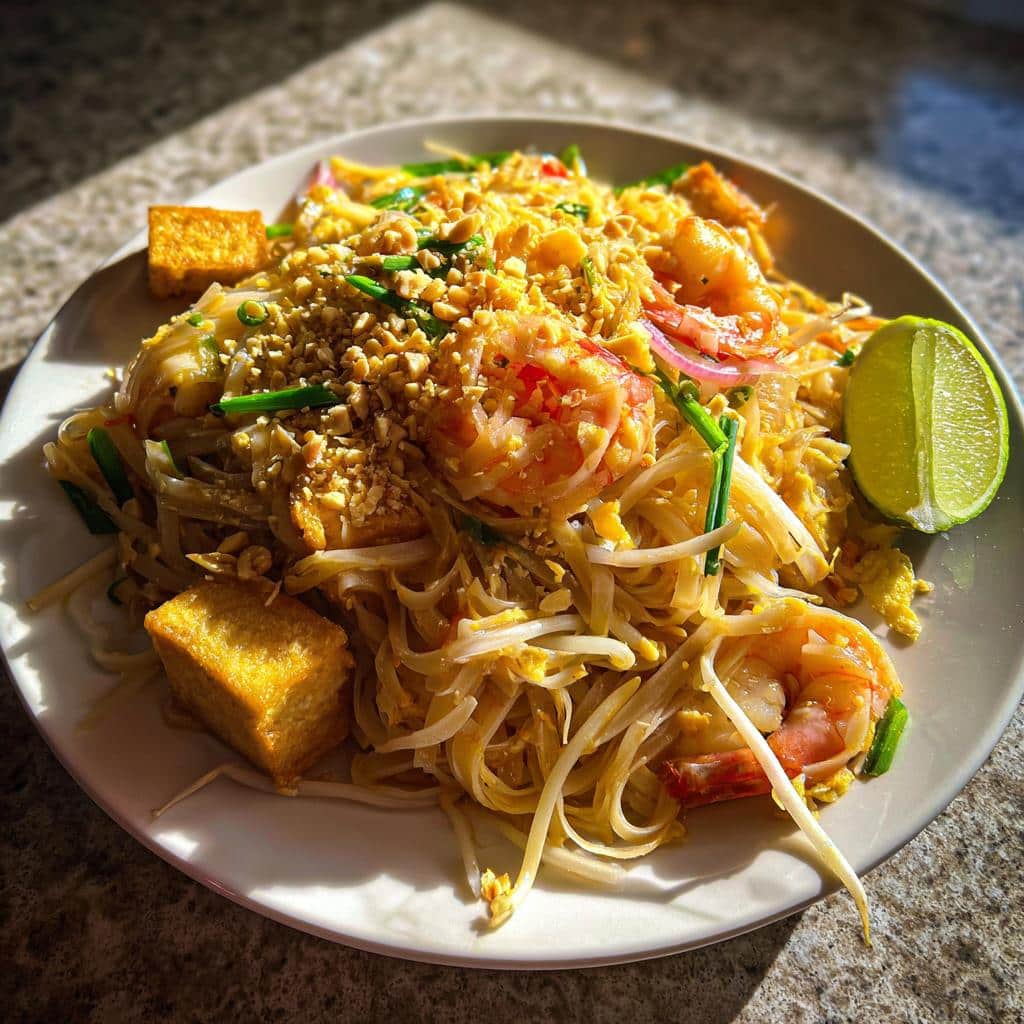
Oh, let me tell you about my absolute favorite weeknight savior – these Pad Thai rice noodles! I swear, the moment that perfect balance of sweet, tangy tamarind, and savory fish sauce hits your tongue, you’ll understand why I make this at least twice a month. It’s that magical combo of flavors that makes Thai food so special, all ready in about the time it takes to decide what to order for delivery. ccc
What I love most (besides how ridiculously fast it comes together) is how fresh everything tastes. The crisp bean sprouts, the bright lime juice, the nutty crushed peanuts – they all work together to create something that feels way fancier than its 25-minute prep time would suggest. And don’t even get me started on those perfectly chewy rice noodles that soak up all that incredible sauce!
This recipe is my go-to when I need something satisfying but don’t want to spend hours in the kitchen. Plus, it’s totally flexible – throw in whatever protein you have on hand, adjust the sweetness to your taste, and boom – dinner is served. Trust me, once you try this version, you’ll never look at takeout menus the same way again.
Table of Contents
Why You’ll Love These Pad Thai Rice Noodles
Listen, I know everyone claims their recipe is the best, but let me tell you why this Pad Thai will become your new obsession:
Quick and Easy
From soaking the noodles to serving, we’re talking 25 minutes tops. I’ve timed it while chasing my toddler around the kitchen – if I can do it that fast, anyone can! The steps are so simple you’ll memorize them after one try.
Bursting with Flavor
That first bite? Magic. The tamarind gives that perfect tang, the fish sauce adds umami depth, and the brown sugar rounds it all out. It’s like a flavor fireworks show in your mouth – sweet, sour, salty all at once.
Customizable
No shrimp? Use chicken. Vegetarian night? Extra tofu please! This recipe bends to whatever’s in your fridge. I’ve even thrown in leftover roasted veggies when I was cleaning out the produce drawer. The sauce ties everything together beautifully.
Ingredients for Pad Thai Rice Noodles
Okay, let’s talk ingredients – because getting this right is what takes your Pad Thai from “meh” to “WOW!” Here’s what you’ll need to make magic happen:
- 200g rice noodles – Look for the flat, wide ones labeled “Pad Thai noodles” (they soak up sauce like little flavor sponges)
- 2 tbsp vegetable oil – Any neutral oil works, but I’m partial to peanut oil for extra aroma
- 2 cloves garlic, minced (trust me, fresh makes all the difference)
- 100g firm tofu, cubed into bite-sized pieces (pat them dry so they get nice and crispy)
- 1 egg – Our secret protein booster that creates delicious little golden strands
- 100g shrimp (optional, but so good if you’re feeling fancy)
- 2 tbsp fish sauce – The umami powerhouse (don’t worry, it won’t taste fishy in the final dish)
- 1 tbsp tamarind paste – That tangy magic that makes Pad Thai, well, Pad Thai
- 1 tbsp brown sugar – For balancing out all those bold flavors
- 1 cup bean sprouts – For that perfect fresh crunch
- 2 green onions, sliced (both white and green parts)
- 1/4 cup crushed peanuts – Because everything’s better with peanuts!
- Lime wedges – For that bright finishing squeeze
Ingredient Notes
Now, about those special ingredients – let me share my hard-earned kitchen wisdom:
The tamarind paste might look intimidating if you’ve never used it before, but it’s what gives Pad Thai its signature tang. Find it in the Asian aisle of most grocery stores or at your local Asian market. In a pinch? Mix 1 tbsp lime juice with 1 tsp brown sugar – it won’t be identical, but it’ll do in an emergency.
As for fish sauce, yes, it smells strong straight from the bottle, but once it hits the hot pan and mingles with other ingredients, it transforms into something magical. If you’re vegetarian, soy sauce works too, though you’ll lose some depth.
One last pro tip – when buying rice noodles, check the package directions. Some only need a quick soak, others take longer. You want them pliable but still slightly firm before cooking (they’ll finish softening in the pan). Over-soaked noodles turn into mush – and nobody wants mushy Pad Thai!
Print
Perfect Pad Thai Rice Noodles Recipe Ready in 25 Minutes
- Total Time: 25 minutes
- Yield: 2 servings
- Diet: Low Lactose
Description
Pad Thai Rice Noodles is a classic Thai stir-fried noodle dish with a balance of sweet, sour, and savory flavors. It’s quick to make and packed with fresh ingredients.
Ingredients
- 200g rice noodles
- 2 tbsp vegetable oil
- 2 cloves garlic, minced
- 100g firm tofu, cubed
- 1 egg
- 100g shrimp (optional)
- 2 tbsp fish sauce
- 1 tbsp tamarind paste
- 1 tbsp brown sugar
- 1 cup bean sprouts
- 2 green onions, sliced
- 1/4 cup crushed peanuts
- Lime wedges for serving
Instructions
- Soak rice noodles in warm water for 15 minutes until soft.
- Heat oil in a pan over medium heat. Add garlic and tofu, stir-fry until golden.
- Push tofu to one side, crack egg into the pan, and scramble.
- Add shrimp (if using) and cook until pink.
- Drain noodles and add to the pan.
- Mix fish sauce, tamarind paste, and sugar together, then pour over noodles.
- Toss everything together until well-coated.
- Add bean sprouts and green onions, stir-fry for 1-2 minutes.
- Serve topped with crushed peanuts and lime wedges.
Notes
- Soak noodles just until soft to avoid overcooking.
- Adjust sweetness or sourness to taste.
- Use tamarind concentrate if paste is unavailable.
- Prep Time: 15 minutes
- Cook Time: 10 minutes
- Category: Main Course
- Method: Stir-Fry
- Cuisine: Thai
How to Make Pad Thai Rice Noodles
Alright, let’s get cooking! I promise this comes together faster than you’d think – just follow these steps and you’ll have restaurant-quality Pad Thai right at home. The key is having everything prepped and ready to go before you start stir-frying. Trust me, once that pan gets hot, things move quickly!
Preparing the Noodles
First things first – those noodles. Place your 200g rice noodles in a large bowl and cover with warm (not boiling) water. Set your timer for 15 minutes – this is crucial! You want them pliable but still slightly firm (al dente, if you will). They’ll finish cooking in the pan later. Drain them well when time’s up – soggy noodles make sad Pad Thai.
Stir-Frying the Base
Heat 2 tbsp vegetable oil in a large wok or skillet over medium-high heat. When it shimmers, add the minced garlic and stir for about 15 seconds until fragrant (don’t let it burn!). Toss in your cubed tofu and cook until golden on most sides – about 3 minutes. Push everything to one side of the pan.
Now the fun part – crack that egg right into the empty space! Let it set for 10 seconds before scrambling. If you’re using shrimp, add them now and cook until they turn pink – about 2 minutes per side. Your kitchen should smell amazing by this point!
Combining Everything
Add your drained noodles to the pan. In a small bowl, whisk together the fish sauce, tamarind paste, and brown sugar – this is where the magic happens! Pour this sauce over the noodles and toss everything together until every strand is beautifully coated.
Finally, throw in the bean sprouts and green onions, giving everything one last vigorous stir-fry for about 1-2 minutes. You want the sprouts to stay crisp – that fresh crunch is everything! Take it off the heat immediately.
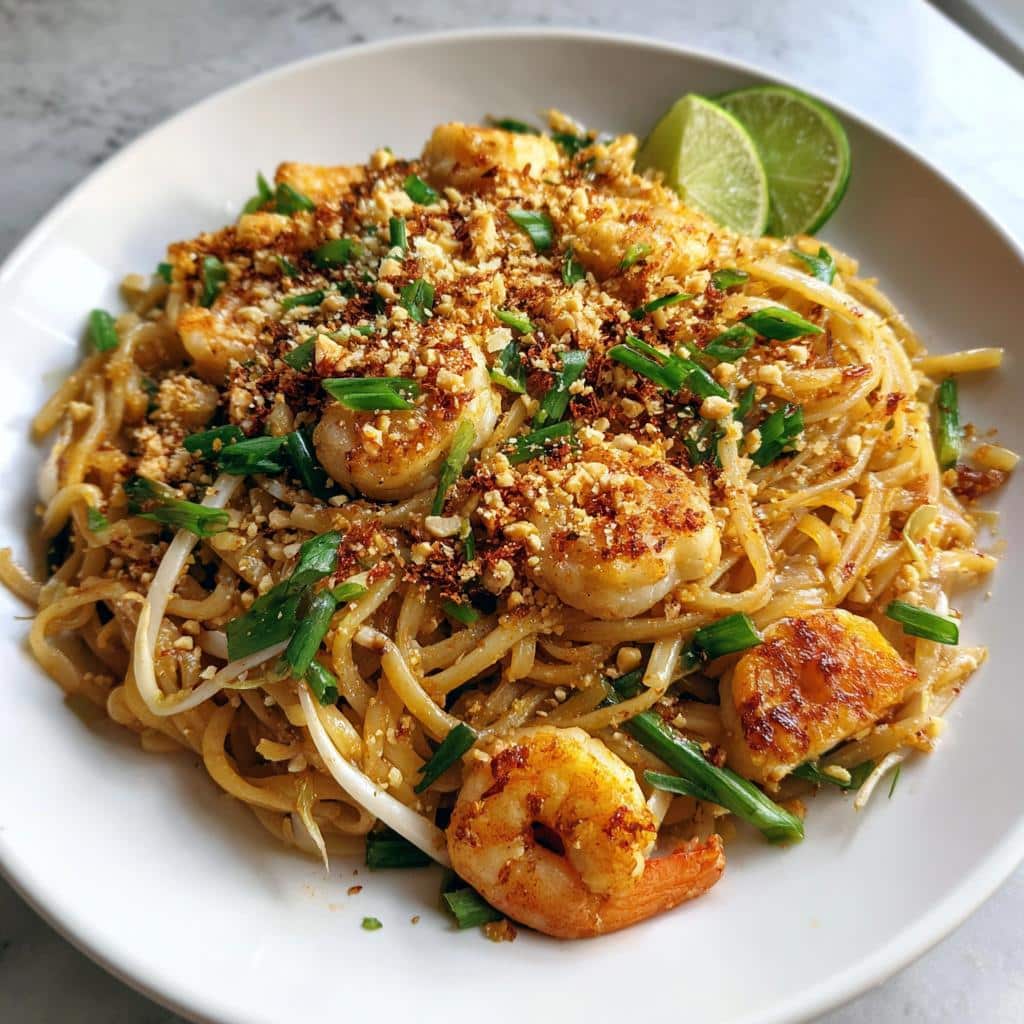
Serve piping hot with a generous sprinkle of crushed peanuts and lime wedges on the side. Squeeze that lime right at the table – the bright acidity takes it over the top!
Tips for Perfect Pad Thai Rice Noodles
After making this recipe more times than I can count, here are my foolproof tips for Pad Thai perfection:
Noodle watch: Keep an eye on those rice noodles while soaking – they go from perfect to mushy real quick! Fish one out at 12 minutes and test it. It should bend without breaking but still have a slight bite. And whatever you do, don’t skip rinsing them with cold water after draining. This stops the cooking instantly.
Sauce balance is everything: Too sweet? Add more tamarind. Too sour? More brown sugar. I always taste my sauce mix before adding it – it should make your taste buds dance with that sweet-sour harmony.
High heat, quick hands: This isn’t the time for timid stirring! Crank that burner up and keep everything moving fast. You want that slight char (called “wok hei”) without burning anything. And for heaven’s sake, have all your ingredients prepped before you start – things move lightning fast once the pan gets hot!
Variations of Pad Thai Rice Noodles
Oh, the best part about Pad Thai? How easily you can make it your own! Here are my favorite ways to mix it up when I’m feeling creative or just cleaning out the fridge:
Protein swap? Chicken works beautifully (I use thigh meat for extra flavor) – just slice it thin and cook through before adding the noodles. Vegetarian night? Double the tofu or toss in some tempeh crumbles for extra texture. I’ve even used leftover pork chops diced small – waste not, want not!
Veggie lovers, this one’s for you: throw in whatever’s in season! Thinly sliced bell peppers, shredded carrots, or even baby corn make fantastic additions. Just add them with the garlic at the start. My secret? A handful of chopped kale – it wilts down perfectly and makes me feel virtuous.
Spice seekers, don’t be shy! A teaspoon of sriracha in the sauce or some crushed red pepper with the garlic gives it a nice kick. The beauty is – it’s your kitchen, your rules!
Serving Suggestions for Pad Thai Rice Noodles
Now for my favorite part – dressing up your Pad Thai like a pro! First rule: always serve with extra lime wedges – that bright citrus squeeze right at the table makes all the difference. I keep a little bowl of crushed peanuts on the side too, because who doesn’t love that extra crunch?
For sides, keep it simple. A quick cucumber salad with rice vinegar cuts through the richness perfectly. If I’m really going all out, I’ll steam some baby bok choy or make summer rolls for dipping. But honestly? This dish stands so beautifully on its own that sometimes I just grab a fork and dive right in!
Storing and Reheating Pad Thai Rice Noodles
Okay, confession time – I rarely have leftovers because this dish disappears so fast! But if you’re lucky enough to have some, here’s how to keep it tasting fresh:
Store cooled Pad Thai in an airtight container in the fridge for up to 2 days. The noodles will soften a bit, but here’s my trick – reheat in a hot skillet with a splash of water to revive them. Microwave works in a pinch, but stir every 30 seconds to avoid hot spots. Pro tip: add fresh bean sprouts and peanuts when serving leftovers – it brings back that perfect texture!
Nutritional Information for Pad Thai Rice Noodles
Let’s talk numbers – because I know some of you (like me!) like to keep an eye on these things. One generous serving of this Pad Thai comes in at about 450 calories, with 18g of protein to keep you satisfied. The 60g of carbs give you that energy boost, while the 4g of fiber from all those fresh veggies helps balance things out.
Now, full disclosure – these numbers can vary depending on your exact ingredients. More tofu? Extra peanuts? Different protein choices? They’ll all tweak the numbers slightly. But what matters most is that you’re getting a delicious, balanced meal packed with fresh flavors – and that’s nutrition I can get behind!
Frequently Asked Questions About Pad Thai Rice Noodles
Over the years, I’ve gotten so many great questions about this recipe – let me share the ones that pop up most often (and my honest answers from all my kitchen experiments!):
Can I use soy sauce instead of fish sauce?
Absolutely! It won’t have that same umami depth, but in a pinch, use 1.5 tbsp soy sauce mixed with 1/2 tbsp lime juice. Or try mushroom soy sauce for extra savoriness. Just taste as you go – you might need to tweak the sugar or lime to balance it.
My noodles always stick together – help!
Oh I feel your pain! Two tricks: First, rinse them really well after soaking to remove excess starch. Second, when stir-frying, keep everything moving constantly and don’t skimp on the oil. If they’re really stubborn, I’ll sometimes toss them with a teaspoon of oil right after draining.
Can I make this gluten-free?
You bet! Just use tamari instead of regular soy sauce (if substituting for fish sauce), and double-check your rice noodles are 100% rice (some brands add wheat). I’ve served this to gluten-free friends many times with rave reviews!
Why is my Pad Thai soggy?
Usually two culprits: over-soaked noodles or overcrowding the pan. Noodles should still be slightly firm before cooking, and your pan needs to be hot enough that everything sizzles when added. If it’s steaming instead of stir-frying, you’ll get mush. Lesson learned the hard way!