
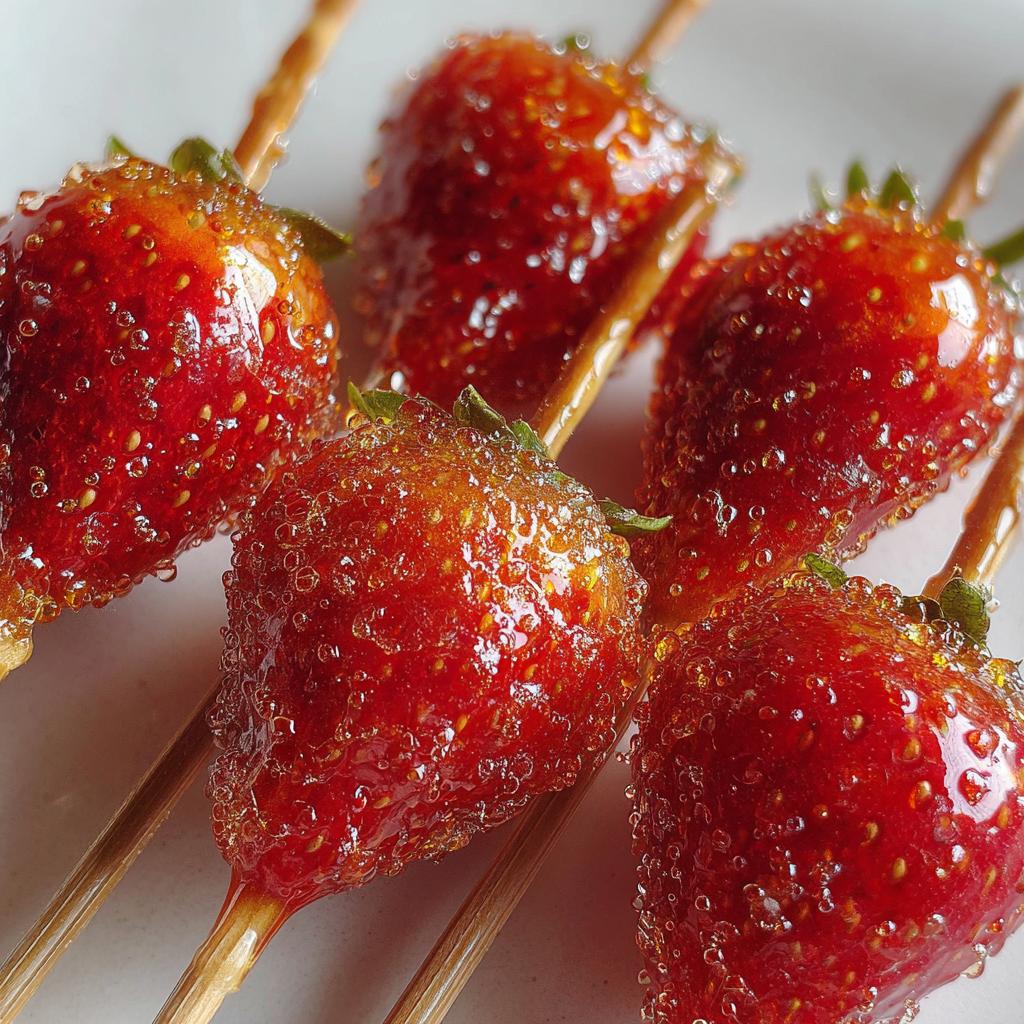
I still remember my first bite of tanghulu – that magical moment when my teeth cracked through the glass-like sugar shell into a juicy strawberry on a bustling Beijing street. This candied fruit snack isn’t just dessert; it’s edible nostalgia that’s been lighting up Chinese night markets for generations. The contrast between that satisfying crunch and the burst of fresh fruit underneath? Absolute perfection.
What started as a winter treat in Northern China has become beloved year-round street food. Vendors stack these glistening ruby-red skewers like edible jewels, their sugar coatings sparkling under festive lights. My version captures that same magic in your kitchen – no street cart required. Just simple ingredients transformed into something extraordinary.
Table of Contents
Why You’ll Love This Tanghulu Candied Fruit Recipe
This isn’t just another candy recipe – it’s pure kitchen alchemy that’ll make you feel like a street food wizard. Here’s why it’s my go-to when I need a dessert that wows:
- 5 ingredients (including the sticks!) is all you need for edible magic
- Ready in under 30 minutes – faster than waiting in a night market line
- That shatter-crisp sugar shell gives the most satisfying crunch
- Endless fun experimenting with different fruits (my kids go nuts for grape versions)
- Makes even grocery-store fruit taste like a luxury treat
Trust me, once you hear that first crisp bite, you’ll be hooked.
Tanghulu Ingredients
The beauty of tanghulu lies in its simplicity – just three main components come together to create something magical. But as my Beijing street vendor mentor taught me, quality matters more than quantity here:
- 1 cup fresh strawberries (or try grapes, hawthorn, or even pineapple chunks) – they must be FIRM and completely dry (I pat mine with paper towels twice!)
- 1 cup granulated sugar – plain white sugar works best for that crystal-clear glassy coating
- 1/2 cup water – filtered if your tap water has strong mineral flavors
- Wooden skewers or popsicle sticks – the short 4-inch ones are perfect for little hands
That’s it! Well… plus whatever toppings you might want to sprinkle on before the sugar hardens. Sometimes I’ll add sesame seeds or edible glitter for special occasions, but the classic version needs nothing extra.
Print
5-Ingredient Tanghulu Recipe for Perfect Candied Fruit Magic
- Total Time: 25 mins
- Yield: 6 skewers
- Diet: Vegetarian
Description
Tanghulu is a traditional Chinese candied fruit snack. It features skewered fruit coated in a hard, shiny sugar shell. The crunchy texture and sweet taste make it a popular street food.
Ingredients
- 1 cup fresh strawberries (or other firm fruit like grapes or hawthorn)
- 1 cup granulated sugar
- 1/2 cup water
- Wooden skewers or sticks
Instructions
- Wash and dry the fruit thoroughly. Pat dry with a paper towel.
- Skewer the fruit onto wooden sticks, leaving space at the bottom for holding.
- Combine sugar and water in a saucepan. Heat over medium-high until the sugar dissolves.
- Bring the mixture to a boil. Reduce heat and simmer until it reaches 300°F (hard crack stage).
- Dip each skewered fruit into the syrup, coating evenly. Let excess drip off.
- Place on a parchment-lined tray to cool and harden completely.
Notes
- Use fully dry fruit to prevent syrup from sliding off.
- Work quickly when dipping to avoid sugar crystallization.
- Store at room temperature in a dry place for up to 2 days.
- Prep Time: 10 mins
- Cook Time: 15 mins
- Category: Dessert
- Method: Stovetop
- Cuisine: Chinese
Equipment You’ll Need for Tanghulu
Don’t worry – you won’t need any fancy gadgets to make authentic tanghulu! These are the exact tools I use every time (and yes, that candy thermometer is non-negotiable – even my Beijing street vendor friends swear by them):
- Wooden skewers or sticks – I save the bamboo ones from takeout orders, but any food-safe sticks work
- Heavy-bottomed saucepan – mine’s a basic 2-quart from the thrift store that’s perfect for sugar work
- Candy thermometer – the clip-on kind saves so many burnt batches (learned that the hard way!)
- Parchment paper – wax paper makes the sugar stick, so parchment’s your best friend here
- Small bowl of ice water – my secret weapon for testing the syrup without burning fingers
That’s seriously it! No stand mixers, no special pans – just simple tools that let the fruit and sugar shine.
Craving something sweet but simple? Try this easy 3‑Ingredient Vegan Fudge – rich, creamy, and completely dairy‑free!
How to Make Tanghulu (candied fruit)
Okay, here’s where the magic happens! Making tanghulu is part science, part art – but don’t let that scare you. I’ve burned my fair share of sugar syrups learning these tricks, so you don’t have to. Follow these steps, and you’ll have perfect candied fruit skewers that’ll make your kitchen smell like a Beijing night market.
Preparing the Fruit
This step separates okay tanghulu from “oh wow!” tanghulu. The sugar coating will slide right off damp fruit, so we need everything bone dry:
- Wash your fruit gently, then pat dry with paper towels – I actually let mine air dry for 15 minutes after patting
- Skewer the fruit leaving about 2 inches at the bottom for holding (my trick: alternate directions so they don’t roll)
- Important: No stems or leaves! They trap moisture that ruins the sugar shell
Seriously, take extra time here. I once rushed this step and ended up with naked strawberries swimming in syrup – not cute!
Making the Sugar Syrup
This is where things get exciting (and slightly dangerous – hot sugar is no joke!). Here’s how to nail the perfect syrup every time:
- Combine sugar and water in your saucepan – resist stirring once it boils or you’ll get crystallization
- Clip on your candy thermometer (300°F is the golden number for that signature glass-like crack)
- Watch for the color change – it’ll go from cloudy to perfectly clear like magic
- Test by dropping a bit in ice water; it should harden instantly into a glassy thread
Pro tip from my Beijing mentor: Swirl the pan gently instead of stirring if needed. And never walk away – sugar goes from perfect to burnt in seconds!
Dipping and Cooling
Now for the fun part! This is where your tanghulu transforms from ordinary fruit to gleaming edible jewels:
- Working quickly, tilt the pan and rotate each skewer to coat evenly – count to three then lift out
- Let excess syrup drip off (tap gently against the pan edge if needed)
- Place on parchment paper immediately – they’ll start hardening almost instantly
- Wait at least 15 minutes before touching (I know it’s hard – but they’re worth the wait!)
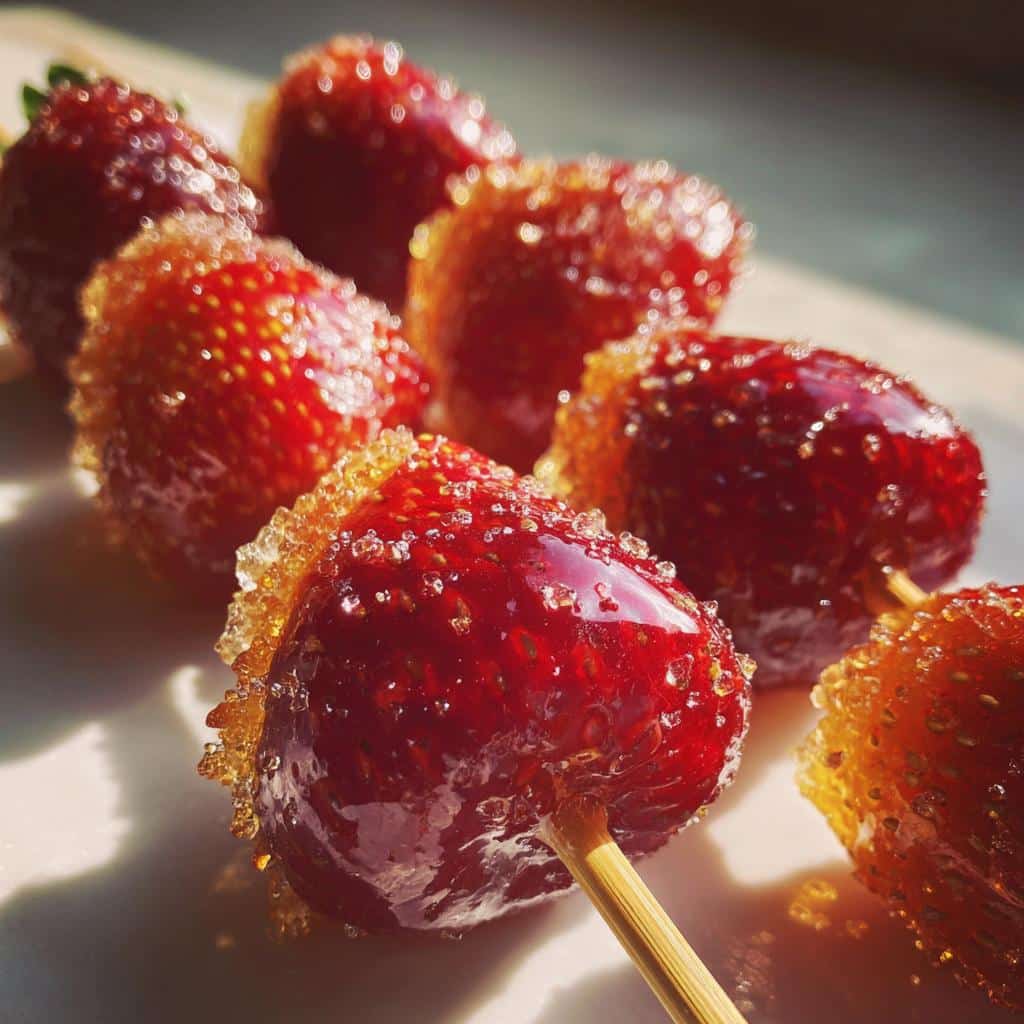
The first time I made these, I burnt my fingers testing one too soon. Now I set a timer and admire how the sugar shell turns into this gorgeous, crackly glass coating as it cools.
Tips for Perfect Tanghulu
After making dozens of batches (and a few hilarious disasters), here are my hard-earned secrets for tanghulu that would make Beijing street vendors nod in approval:
- Fight humidity – Rainy days = sticky tanghulu. I only make these when my kitchen’s dry (or blast the AC!)
- Thermometer trust – That 300°F mark isn’t optional. I learned this after a too-soft batch that never hardened properly.
- Work fast but safe – Sugar waits for no one! I prep everything within arm’s reach before starting.
- Double-dry fruit – I pat, then air-dry, then pat again. Obsessive? Maybe. Effective? Absolutely.
Bonus: Keep kids and pets away during dipping – molten sugar is no joke!
Tanghulu Variations
One of my favorite things about tanghulu is how easily you can play with the recipe. Once you’ve mastered the basic version, try these fun twists that’ll make your candied fruit stand out at any gathering:
Fruit Alternatives That Work Wonders
The classic strawberry version will always have my heart, but these alternatives bring their own special magic:
- Grape tanghulu – Use seedless red or green grapes for perfect bite-sized treats (my niece calls them “candy bubbles”)
- Hawthorn berries – The traditional choice in Beijing, with a lovely tartness that balances the sweet shell
- Clementine segments – Peel and separate them first – the citrus burst under sugar is unbelievable
- Pineapple chunks – Their natural acidity cuts through the sweetness beautifully
Just remember: The fruit must be firm enough to skewer and dry enough to hold the sugar coating. I learned this the hard way with overly ripe peaches – delicious, but messy!
Creative Coatings and Toppings
While the classic clear sugar shell is gorgeous, sometimes I like to jazz things up:
- Sesame seeds – Sprinkle on immediately after dipping for a nutty crunch (black sesame makes a stunning contrast)
- Edible glitter – Makes any tanghulu look like it came from a fairy tale
- Chocolate drizzle – Wait until fully cooled, then zigzag melted chocolate over the hardened sugar
- Food coloring – Add a drop to your syrup for pastel-hued treats (perfect for baby showers!)
My personal favorite? A mix of white and black sesame seeds – it gives that authentic Beijing street vendor look with zero extra effort.
Seasonal Specialties
I love adapting tanghulu to different times of year:
- Winter – Cranberries and mandarin oranges for holiday parties
- Spring – Whole strawberries dipped halfway for a “dipped strawberry” effect
- Summer – Cherry tomatoes (sounds weird, tastes amazing with the sweet-salty combo)
- Fall – Persimmon slices or small apple chunks dusted with cinnamon sugar
The possibilities are endless – last Halloween I even made mini “monster tanghulu” with googly candy eyes stuck to the sugar shells. The kids went wild for them!
Storing and Serving Tanghulu
Here’s the bittersweet truth about tanghulu – it’s absolutely magical when freshly made, but it doesn’t stay perfect forever. After watching countless sugar shells turn sticky in Beijing’s humid summers, I’ve learned all the tricks to keep that signature crunch as long as possible.
The Best Way to Store Your Tanghulu
If you must store them (though I rarely have leftovers!), here’s how to do it right:
- Room temperature only – The fridge turns the sugar shell sticky almost immediately. I learned this the hard way with a batch meant for a party.
- Single layer is key – Stacking causes the sugar to crack and fruit juices to leak. I use a baking sheet lined with parchment.
- Up to 2 days max – Beyond that, the fruit starts weeping and the sugar loses its glass-like quality. They’re still edible, just not as dazzling.
My Beijing street vendor friend stores hers in paper cones – the slight airflow helps prevent sweating. At home, I sometimes use a cake stand with a glass dome if I’m feeling fancy.
Serving Tips for Maximum Wow Factor
The moment that sugar shell cracks under someone’s teeth is pure magic. Here’s how to make that experience unforgettable:
- Serve immediately if possible – That first hour after making them is when the crunch is at its best.
- Use fun holders – I stick the skewers in a foam block or even a halved cabbage for parties. Kids love grabbing them this way!
- Mind the temperature – Serve in a cool room – summer picnics can melt your masterpiece before it’s eaten.
- Pair with tea – The slight bitterness of jasmine or green tea balances the sweetness perfectly.
Pro tip: If storing briefly before serving, keep them in the driest part of your kitchen. I avoid placing mine near the stove or sink where humidity lurks.
Honestly? The best tanghulu memories happen when you gather friends around the stove and eat them fresh. The sound of everyone’s first bite – that collective “CRUNCH!” – is better than any compliment. Just be ready to make another batch… they disappear fast!
Tanghulu Nutritional Information
Let’s be real – we’re not eating tanghulu because it’s a health food. But as someone who’s polished off an embarrassing number of these skewers (for research, obviously), I still like knowing what I’m biting into. These numbers are estimates based on standard strawberries and sugar – your exact counts might dance a bit depending on fruit size and how thick your sugar coating is.
- Calories: About 120 per skewer (mostly from that glorious sugar shell!)
- Sugar: 28g (hey, it’s literally candied fruit – no surprises here)
- Carbs: 31g total (1g comes from the fruit’s natural fiber)
- Fat/Protein: Basically zero – this is pure plant-based indulgence
- Sodium: None at all unless you get fancy with salted toppings
The beauty? Unlike store-bought candy, you’re still getting actual fruit in there. I figure if my kids are going to beg for sweets, I’d rather it be something with real vitamin C! Just maybe don’t eat six in one sitting like I may have done… for science.
Frequently Asked Questions About Tanghulu
Can I use frozen fruit to make tanghulu?
Oh honey, I wish! Frozen fruit is sadly a no-go here – all that extra moisture will make your sugar coating slide right off. Trust me, I learned this the hard way when I tried to shortcut with frozen strawberries during winter. The result? Sad, naked berries swimming in syrup. Fresh, firm, and completely dry fruit is absolutely non-negotiable for that perfect crackly shell.
Why does my sugar syrup keep crystallizing?
Ah, the dreaded sugar grainy-ness! This used to drive me nuts until my Beijing street vendor friend taught me her tricks. First, never stir the syrup once it starts boiling – that’s asking for crystallization city. Second, make sure your pan is super clean before starting (any residue can cause issues). And third – this was a game-changer – add a tiny splash of lemon juice to the syrup. The acid helps prevent those pesky sugar crystals from forming!
How can I tell when the sugar syrup is ready without a thermometer?
While I swear by my candy thermometer, there is an old-school test Grandma taught me. Drop a bit of syrup into ice water – if it forms hard, glass-like threads that snap cleanly? Perfect! If it’s still soft or bendy, keep cooking. Just be careful – that syrup is crazy hot. Burnt fingers are no fun (another lesson from personal experience!).
Can I make tanghulu ahead of time for a party?
Honestly? They’re best enjoyed within a few hours of making. The sugar shell starts losing its signature crunch after about a day. That said, you can prep your fruit skewers the night before and make the syrup fresh right before serving. I sometimes set up a “DIY tanghulu station” at parties – guests love dipping their own!
What’s the secret to getting that professional-looking glossy coating?
The magic is all in the temperature and speed! Your syrup needs to hit exactly 300°F (hard crack stage) for that glass-like shine. And here’s my secret move: After dipping, hold the skewer upside down for a few seconds to let gravity pull the sugar into an even coat before placing it down. The Beijing street vendors do this twisty wrist motion that makes the sugar spiral beautifully – I’m still working on perfecting that one!
Share Your Tanghulu Experience
Nothing makes me happier than hearing about your tanghulu adventures! Did your sugar shell turn out perfectly crisp? Maybe you discovered an amazing fruit combo I haven’t tried yet? I want to hear all about it – the triumphs, the hilarious fails (we’ve all been there!), and everything in between.
My favorite part of sharing recipes is seeing how they come to life in other kitchens. That moment when someone sends me a photo of their first attempt – maybe with slightly lopsided sugar coating or an ambitious grape-and-strawberry hybrid skewer – it’s pure joy. Those are the stories that make all my burned sugar experiments worthwhile.
If you snap a picture of your creation, I’d be absolutely delighted to see it. And if you’ve got any brilliant tweaks or unexpected discoveries, share those too! Some of my best tanghulu tips have come from readers who put their own spin on the recipe. Who knows – your innovation might just become someone else’s new favorite version!
Get inspired with more beautiful and tasty recipes – check out our Pinterest and start pinning today